Bathroom Renovation Waste: What Can Be Thrown Away?
Tiles, sanitary ware, rubble, plasterboard, and other common bathroom renovation waste.
Introduction
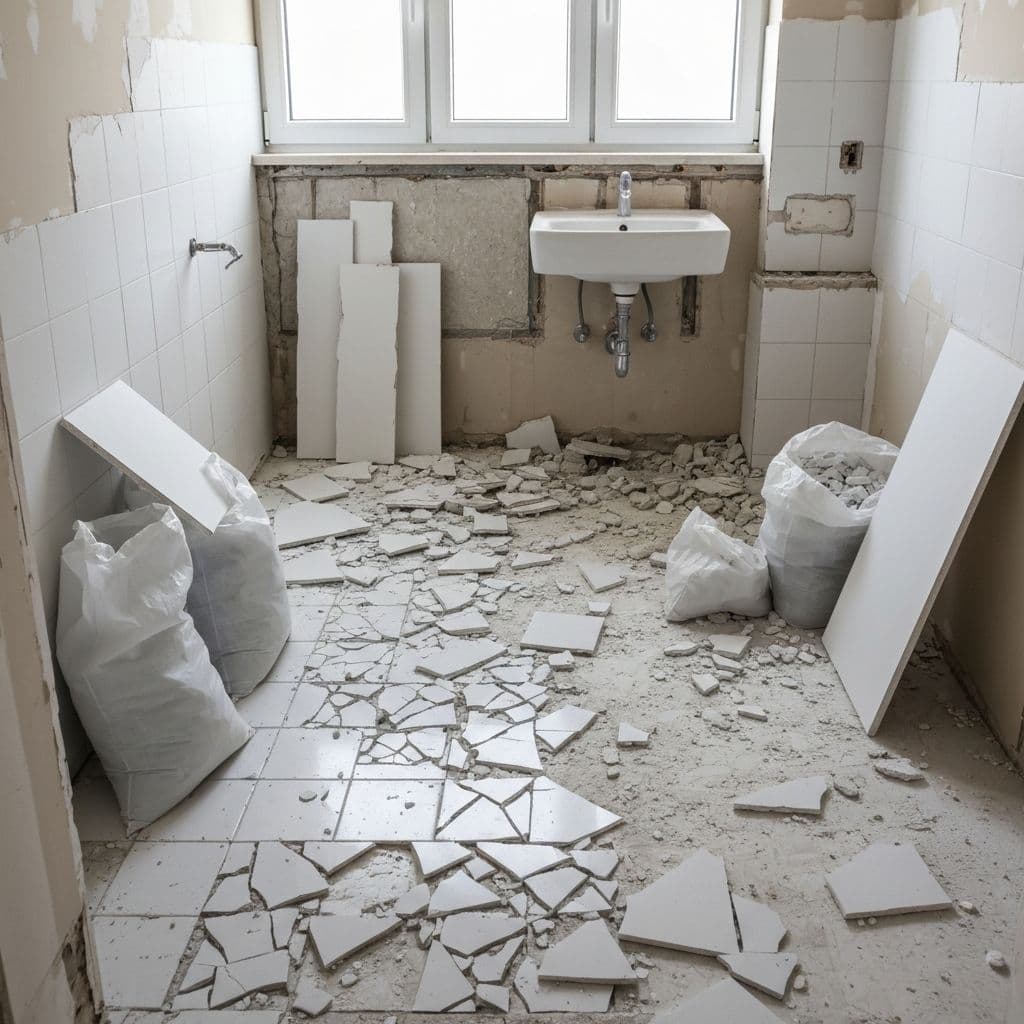
Bathroom renovation waste deceives you. The room is small, the cleanup looks small, and then you start lifting bags of broken tile and realise the floor of your driveway is supporting more weight than the bathroom itself ever did.
Three things make bathroom waste fundamentally different from any other room: cast-iron bathtubs that can weigh 150 kg, mirrors that are glued directly to the tiles (a Cyprus speciality), and tempered shower glass that detonates into thousands of pebbles without warning. Below: how to handle each of those properly, plus the hidden waste that turns up behind the old tiles in older Cyprus properties.
The density trap: small room, heaviest waste
The most common bathroom-renovation mistake is sizing the skip by the room. Bathrooms are physically small, but the waste they produce is the densest of any household renovation, by a long margin.
Quick reality check on weight:
- A standard rubble bag of broken floor tile: 25–35 kg
- The same bag of MDF cabinet panels: 3–5 kg
- A toilet bowl with cistern: 30–40 kg
- A pedestal sink: 20–25 kg
- A 1.7 m steel-enamel bathtub: 35–50 kg
- The same bathtub in cast iron: 80–150 kg
- Old tile adhesive scraped off walls: dense and surprisingly heavy
The result: bathroom waste looks like very little and weighs a lot. That's normal for a skip: tiles, rubble and old sanitary ware from one bathroom go into a standard skip, as long as the heavy part doesn't fill it to the top. Cabinets, boxes and the old door go in alongside. Pick Construction when you book: if the size you choose takes only a limited amount of heavy waste, the form says so before you confirm.
Before any demo: the water shutoff sequence
First move on a bathroom job isn't the sledgehammer. It's isolating water, and in older Cyprus properties the isolators are not always where you expect.
Standard order, before touching anything:
- Close the bathroom-floor isolator if there is one (most CY apartments have a per-floor or per-unit valve in a corridor cupboard or stairwell box)
- If no local isolator works, close the main building valve and warn neighbours
- Open every tap in the bathroom to release line pressure: water keeps flowing for 30–60 seconds
- Flush the toilet to empty the cistern
- Disconnect the toilet supply hose, hold over a bucket: the cistern itself holds roughly 6 litres
- Disconnect the sink and shower supplies over the bucket
- Leave taps open overnight if pressure is suspected anywhere downstream
If the bathroom has a hot water tank in the loft or a roof boiler, isolate that too and let it drain through a downstairs tap. Cutting a pipe with live tank pressure behind it sprays water across the room within seconds and ruins anything you were planning to keep clean.
The bathtub: the single hardest item
A bathtub is almost always the worst-case waste item in a bathroom renovation. Type determines everything:
- Acrylic: bulky but light (15–25 kg). Usually walks out one piece if the door is wide enough
- Steel-enamel: moderate weight (35–50 kg). Two-person carry, manageable
- Cast iron: brutal (80–150 kg). Three-person lift at minimum, and only if the path is clear
- Built-in tiled: adds 30–50 kg of cement, mortar, and tile around the bath itself
The cast-iron problem is real: an old enamelled cast-iron bath does not come out of an apartment without either professional movers or a controlled cut. Plumber-with-grinder cuts it into two or three sections in the bathroom itself, then bags each section. This is the standard approach in Cyprus apartment buildings; single-piece extraction usually fails at the bathroom door or the first stair turn.
Confirm these before demolition day, not on it: stair widths, lift internal dimensions, doorway clearance, whether the bath comes out as one piece or in cut sections, who does the cutting, and who pays. Discovering at 11am that your cast-iron bath is six centimetres wider than the apartment door is a bad day.
Glued mirrors: the Cyprus epidemic
Bathroom mirrors in Cyprus are very often glued directly to the wall tiles with construction adhesive (often the silver-backed mirror right against the tile, with no frame, no clips, no brackets). Pulling that mirror off without preparation is the single most common cause of bathroom-renovation injuries.
Safe removal sequence for a glued mirror:
- Wear cut-resistant gloves and eye protection, not optional
- Cover the floor with cardboard or a heavy sheet
- Tape the entire face of the mirror in a tight grid pattern with strong duct tape (turns shattering into manageable sheets, not flying shards)
- Have a helper supporting the mirror from below before any prying starts
- Use a thin pry bar at MULTIPLE points along the edge, never one corner
- Apply gradual, even pressure: patience prevents emergency-room visits
- Once the bond breaks, the mirror comes off all at once: support is essential
- Wrap immediately in builder's plastic, tape closed, label 'GLASS'
For mirrors over 80×100 cm, glued, with corroded edges, or already cracked: call a glazier. The €40–80 fee is dramatically cheaper than a stitched hand. Never throw an unwrapped mirror into a mixed skip: it will break later during loading and somebody else (the driver, your neighbour, a child) will be the one who gets cut.
Tempered shower glass: the silent grenade
Shower screens and glass doors in modern Cyprus bathrooms are tempered (toughened) glass. Tempered glass is much stronger than regular glass, until it isn't. Then it explodes simultaneously into thousands of small rounded fragments, usually with no warning, sometimes hours or days after a minor edge impact.
What this means in practice:
- Never lean a tempered panel on a corner or edge: a point load means silent crack propagation
- Never attempt to cut tempered glass: it will detonate
- Remove the frame hardware first, then carry the panel flat
- Two people minimum for any panel over 1.5 m tall
- Wrap the full panel in builder's plastic before any movement, even within the room
If a tempered panel does detonate during removal, the fragments are small and rounded (less injury risk than regular sheet glass) but they travel everywhere: into tile grout, drain traps, towel rail mounts, corners of the room. Sweep with a magnet brush if available, vacuum twice, and check the floor around the bath for the next several days: fragments stuck in grout work loose over time and end up under bare feet.
Renovating a bathroom? Tiles and all go in one skip
Old tiles, bathtub, sanitary ware, glass: pick Construction when you book, and the form tells you if the size you chose has a limit on heavy waste. Same-day across Limassol, Paphos, Larnaca, Nicosia.
Book a Skip NowToilet, sink, bidet: ceramic shrapnel
Old vitreous china (toilet, sink, bidet, pedestal) creates the second-most-dangerous waste in a bathroom renovation after glass. Whole pieces are heavy and awkward; broken pieces have razor-sharp ceramic edges that cut through ordinary rubble bags as if the bag wasn't there.
Two safe approaches:
- Whole-piece carry: unbolt, drain, two-person lift directly into a skip or pickup. Best when access allows it
- Controlled break: for items that won't fit through doors, break inside a heavy contractor sack with a hammer, then immediately seal
- Never break sanitary ware in open air with no containment: fragments fly several metres
- Double-bag every load: single rubble bags slice open within two carries
- Drain toilet cistern and trap thoroughly before moving (5–10 minutes upside down over a bucket)
- Plug the disconnected drain pipe in the floor: sewer gas comes back fast, and a stray ceramic shard down the drain is a plumber visit
Old sanitary ware is rarely worth donating. Stains, micro-cracks, missing seats and outdated fittings mean even free-to-collect posts find no takers. The exception is modern (under five years) wall-hung units; those occasionally find homes via expat groups.
What's actually behind those tiles
Older Cyprus bathrooms hide a remarkable amount of additional waste behind the visible installation. Plan for 30–40% more volume than the visible room suggests, especially in pre-2000 properties.
Common discoveries on demo day:
- Tile-on-tile: the previous renovation tiled directly over the older tiles instead of removing them; sometimes three layers stacked
- Wet-rotted MDF backing behind the vanity unit where the sink trap has been slowly leaking for years
- Mouldy plasterboard behind the bathtub end panel, invisible until the bath comes out
- Original 1970s/80s cement screed under the floor tiles, 40–60 mm thick, brutal weight
- Capped-off pipes still under mains pressure (verify with plumber before cutting; the cap rusts through over decades)
- Old electrical boxes for fittings that no longer exist
- Pre-1990 vinyl flooring with potential asbestos backing: do NOT crumble or grind; if suspected, stop work and call an inspector
The asbestos warning is real but manageable. Cyprus had asbestos-containing vinyl floor tiles and adhesives in some properties built before about 1990. Intact tile is not a hazard; pulverised tile is. If you find dark-coloured vinyl under your current floor in an old property and it looks 30+ years old, stop, photograph, and ask a qualified inspector before demolition continues. The right answer might be 'leave it in place and tile over it' rather than attempting removal yourself.
Rubble bag discipline
Bathroom waste lives in rubble bags more than any other renovation. Get the bag handling wrong and the cleanup becomes a back injury, a sliced palm, or a skip the truck refuses to take.
Practical rules:
- Maximum 25 kg per bag: if it's not liftable by one person, it's useless
- Double-bag anything containing tile shards, sanitary-ware fragments, or glass
- Use proper builders' rubble sacks (woven polypropylene), not garden waste bags or supermarket bags
- Tie tightly: open bags collapse and spill in the skip
- Label glass/sharp loads with tape so the loader knows
- Load skip in order: heaviest rubble at the bottom (spread flat across the base), ceramic in the middle, anything fragile or wrapped on top, last
The loading order matters more than people think. Throwing 25 kg of broken tile on top of a wrapped mirror cracks the mirror through its wrapping. Loading a cast-iron bath section on top of plastic plumbing flattens and shreds it into hard-to-handle plastic-and-water mush. Heavy goes down, fragile stays up.
When to stop DIYing and call the pro
Most bathroom waste is a DIY job with a contractor handling the actual renovation. But four specific items push this firmly into 'call a specialist' territory:
- Cast-iron bathtub in an apartment: a controlled cut by a plumber-with-grinder is the standard, not the exception
- Large glued mirror over 80×100 cm with corroded silvering or existing edge cracks: pay a glazier
- A tempered glass panel that has ALREADY cracked but not yet shattered: it will go, and you don't want to be the one moving it when it does
- Suspected asbestos-containing vinyl flooring in any pre-1990 property: qualified inspection first, period
Beyond the safety angle, the economics often favour professional handling for bathrooms. A small bathroom's waste is dense and compact: it takes little room in the skip and leaves space for the lighter stuff. Compare that to multiple Green Point runs of progressively heavier and sharper material, plus the personal risk on every load. For most full bathroom demos in Cyprus, one skip on the final demo day is the calmest answer.
Book a skip in your city
Prices, same-day rules and permits differ by city, so each one has its own page: skip hire in Limassol, skip hire in Nicosia, skip hire in Larnaca and skip hire in Paphos. The east coast and the Polis side have their own pages too: skip hire in Paralimni, skip hire in Ayia Napa, skip hire in Protaras and skip hire in Polis. The price is fixed in the form before you confirm.
Related articles
 Home Renovation
Kitchen Renovation Waste Disposal Guide
What to do with old cabinets, tiles, countertops, packaging, and renovation debris.
 Waste Disposal Guides
What Size Skip Do I Need in Cyprus?
The short answer: a 6 m³ for a bathroom, one room or a garden after pruning; a 9 m³ for a kitchen or a flat clearance; a 12 m³ for a villa strip-out. Sizes, prices and the traps.
 Furniture Disposal
How to Dispose of an Old Sofa in Cyprus
Options for removing an old sofa when it no longer fits in your home or car.