Kitchen Renovation Waste Disposal Guide
What to do with old cabinets, tiles, countertops, packaging, and renovation debris.
Introduction
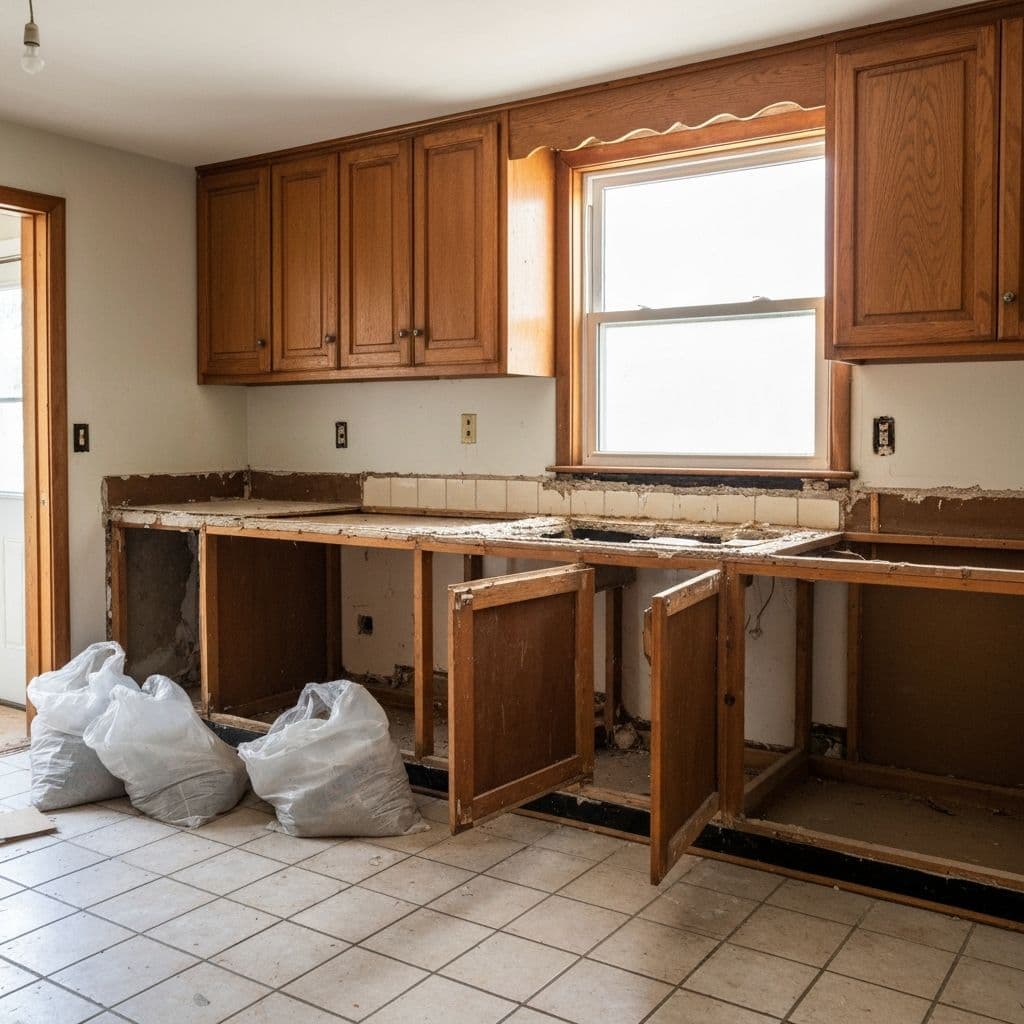
Kitchen renovations always create more waste than the homeowner planned for. The deceiving part is that it arrives in three separate waves: the old kitchen during demolition, hidden waste that surfaces when the cabinets come out, and packaging from the new kitchen a week or two later.
Each wave has a different volume profile, different weight, and a different right way to handle it. Below: how to plan the cleanup so it does not take over your driveway for three weeks: sequencing the demo, the hidden worktop weight bomb, the second wave of packaging nobody mentions, and when in the project to actually order the skip.
A kitchen produces five or six waste streams, not one
A kitchen demo does not produce one type of waste; it produces several streams stacked on top of each other. Treating it as 'kitchen rubbish' is the fastest way to end up with a mixed pile that nobody wants to lift and that gets refused for recycling.
What is actually coming out:
- Cabinets and panels: bulky and light (volume hog)
- Worktops, especially stone or granite: compact and very heavy (weight hog)
- Tiles, adhesive, plaster: compact, heavy, sharp
- Old appliances: large items, separate handling, weight-restricted at Green Points
- Plumbing parts: small, often wet and dirty
- Cardboard, polystyrene, film from the new kitchen: bulky, clean, recyclable if kept separate
Each stream behaves differently in a skip, at a Green Point, and in a private pickup. Sorting starts on demo day, not at collection time.
Order of demo matters for cleanup
Demoing in the wrong order doubles the cleanup work. A clean sequence keeps waste streams from contaminating each other and makes them easier to remove.
A workable order for a typical kitchen:
- Day 0: clear out everything sellable or donatable (working appliances, intact cabinet sets) BEFORE the dust starts
- Day 1 morning: disconnect plumbing, drain everything, remove sink, taps, dishwasher line
- Day 1 afternoon: remove appliances (oven, hob, extractor), bag plumbing parts separately
- Day 2: cabinets out, dismantled flat as they come down (more on that below)
- Day 3: tile and worktop removal (the heaviest, dirtiest stage)
- Day 4: final sweep, plaster patches, electrical reconfiguration debris
Why this matters: if you knock the tiles off first, the dust coats everything else, and the cardboard from the new kitchen later becomes unrecyclable. Disconnect water first or the plumbing leak ruins the wood panels you were going to stack outside.
Take the cabinets apart before moving them
This single trick is worth a skip-size downgrade. Whole cabinets take 3–4× the space of the same cabinets flat-packed.
Practical steps:
- Doors off first: 3–4 screws each
- Drawers out
- Shelves out
- Carcasses unscrewed at the corner joints (most Cyprus chipboard kitchens use cam-lock fittings; a coin or screwdriver opens them)
- Stack panels flat by size in the loading area
- Keep the hardware (handles, hinges) in one bag: surprisingly often reused
A typical 4m run of base plus wall cabinets, left whole, fills a 6m³ skip on its own. The same cabinets dismantled fit in roughly a third of that. Do not drag a full cabinet down two flights of stairs: take the doors off in place, then unscrew the box.
Exception: if the cabinets are in good condition, do not dismantle; try to give the whole kitchen away first. Facebook groups, building staff, the next tenant. A complete used kitchen finds takers in Cyprus surprisingly often, especially in expat areas.
The hidden weight bomb: stone and granite worktops
This is the single most common reason kitchen renovation skips get refused on collection or hit with a weight surcharge. Worktops look like one item, but the material changes everything:
- Laminate worktop: light, cuttable with a normal saw, no problem
- Solid wood: moderate weight, splits with a saw, no problem
- Quartz or composite: heavy, does not cut without proper tools, real problem
- Granite or marble: extremely heavy, 100+ kg for a 2m run, two people minimum to lift
- Cast concrete: same problem doubled, sometimes three people
A 3m granite worktop alone can weigh 200 kg. Put it on top of a skip already loaded to the brim with tiles and broken screed, and the truck arrives, weighs the skip, and either refuses to take it or charges a surcharge.
If you have a stone worktop, count it as heavy waste along with the tiles, not as kitchen furniture, and pick Construction when you book. It goes into the same skip; just keep the heavy part from filling it to the top. If the size you chose has a limit on heavy waste, the form tells you.
Greasy hoods and wet plumbing: keep them away from cardboard
Two waste streams ruin everything else in the skip more than anything else: extractor hood grease and water trapped in old plumbing.
The extractor problem:
- Years of cooking grease coat the housing and filters
- Grease wipes onto every flat surface it touches
- Contaminates cardboard packaging from the new kitchen, making it unrecyclable
- Smells in summer heat after two days
Take the filters out first; they are usually the worst part. Bag the housing in builder's plastic before moving it. Don't stack it on top of cabinet doors. Load it last, on a corner, away from clean materials.
The plumbing problem: old siphons hold standing water, often grey, sometimes worse. Flexible hoses hold water too. Filter housings can hold half a litre. A box of plumbing parts emptying into a skip soaks cardboard and panel bottoms. Drain everything outside before moving: disconnect over a bucket, let parts sit upside down for ten minutes, then bag them.
Kitchen demo turning into a bigger cleanup?
Old cabinets, stone worktop, tiles, packaging from the new kitchen: describe the mix or send a photo, and we'll suggest the right skip size. Same-day delivery across Limassol, Paphos, Larnaca, Nicosia.
Book a Skip NowAsk the new-appliance store to take the old one
Easy money saved that almost everyone misses. When you order new appliances in Cyprus, the delivery team will frequently take the old appliance away at the same visit, but you usually have to ask in advance, sometimes for a small fee, sometimes free.
Worth asking about:
- New fridge, washing machine, dishwasher: the ones shops take back most often
- Ovens: sometimes yes, sometimes no, depends on the installer
- Extractor hoods: rarely, but worth asking
- Hobs: usually only if buying together with a new oven
Why this matters for waste planning: each appliance removed this way is one fewer 60–80 kg item in your skip. A fridge alone takes about the space of 4–5 cabinet doors and is restricted at most Green Points anyway.
Negotiate take-back BEFORE you pay. Once the order is placed, you have nothing left to bargain with. The same phone call also tells you whether they can coordinate the timing: old kitchen out, old appliance gone the same week, new kitchen in.
What actually surfaces when the old kitchen comes out
In Cyprus apartments and houses over fifteen years old, the kitchen demo reveals a surprising second pile of waste: stuff hidden behind, under or around the original kitchen and never properly removed when it was installed.
Common finds:
- An older layer of tiles directly underneath the current floor, sometimes two layers in older properties
- Damp-rotted MDF on the back walls where a dishwasher or sink leak ran for years
- Old plaster patches that crumble when the units pull away
- Original cement skirting from the 1980s that nobody bothered to remove
- Disused water pipes capped behind cabinets (sometimes still pressurised: verify with the plumber before cutting)
- Old electrical boxes that the current sockets bypass
- Mouse or rat nests in the cavity below base units (rural and ground-floor properties especially)
Plan for this in two ways: do not book the skip for collection until AFTER demo day, and order one size up from what the visible kitchen looks like. The hidden layer adds 20–30% volume almost every time.
The forgotten wave: packaging from the new kitchen
A week or two after demo, when the new kitchen arrives, a second wall of waste lands, and almost nobody plans for it.
A flat-pack kitchen delivery typically drops off:
- 30–50 cardboard boxes of various sizes
- Polystyrene corners for every cabinet face and worktop section
- Plastic film around every door, panel and worktop
- Wooden pallets the units came on
- Bubble wrap and foam sheets around appliances
- Smaller plastic bags of hardware (often dozens)
- Manuals, warranty cards, packing slips
Total volume: roughly a third of a 6m³ skip on its own.
Cardboard and polystyrene are clean: keep them separate from demo waste and they are easy to recycle. Most Green Points accept clean cardboard freely; some also take polystyrene. Mix them with extractor grease or wet plumbing parts and they become regular waste.
If your skip is booked for ONE collection at the end of the whole project, this packaging slots in. If the skip leaves after demo, you will be hauling boxes for two weekends.
When in the project to actually order the skip
Timing matters even more in holiday homes. Kitchen refits in the villas of Paralimni and Kapparis, or in the old stone houses around Polis and Latchi, are usually squeezed between November and March while nobody is staying; book skip hire in Paralimni or skip hire in Polis for the day the old units come out.
The biggest scheduling mistake: ordering the skip for Day 1 so it sits in the driveway through the whole demo. The bad reasons people do this:
- Feels easier to throw things in as they come out
- Want to avoid stacking waste in the house
Good reasons not to:
- A skip in the driveway for a week costs more: some providers charge per-day after a free window
- Hot Cyprus summer plus open skip equals smell and flies within 48 hours
- Neighbours and passers-by use it as a free disposal point, and you end up paying to dispose of someone else's mattress
- It blocks the car you are trying to use for runs to the hardware store
Better timing for most kitchen jobs:
- Day 1–3 (demo): stack waste in a single corner outside, covered with a tarp
- Day 4 morning: skip arrives, fill in one focused day
- Day 4 afternoon: skip leaves, driveway clear before the new kitchen delivery
- Week 2 (new install): second smaller waste run for packaging, OR include in the original skip if the schedule allows for one combined collection
Apartment exception: if the renovation is in a flat with no yard space, the calculation flips: skip arrives day 1 because there is literally nowhere to stack waste in between. But for a house with a driveway, time it for one focused day.
Book a skip in your city
Prices, same-day rules and permits differ by city, so each one has its own page: skip hire in Limassol, skip hire in Nicosia, skip hire in Larnaca and skip hire in Paphos. The east coast and the Polis side have their own pages too: skip hire in Paralimni, skip hire in Ayia Napa, skip hire in Protaras and skip hire in Polis. The price is fixed in the form before you confirm.
Related articles
 Home Renovation
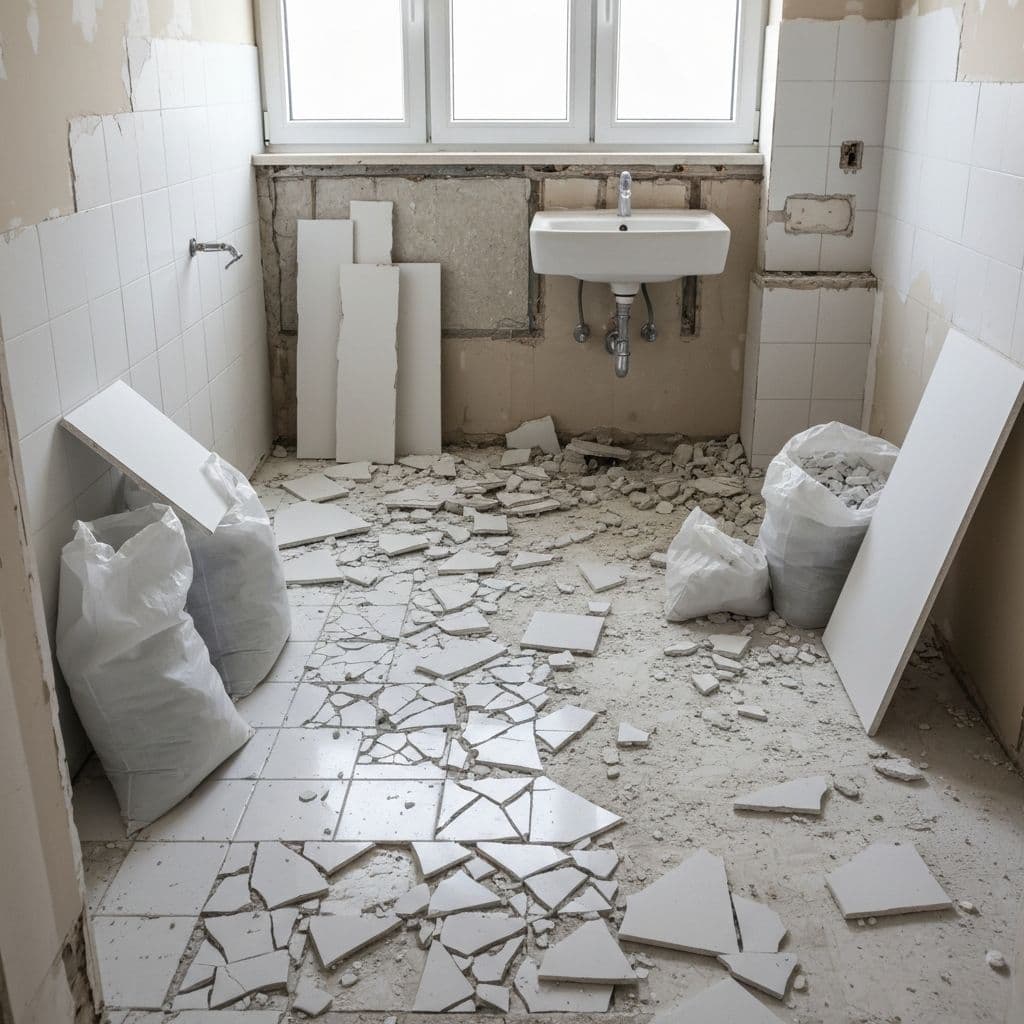
Bathroom Renovation Waste: What Can Be Thrown Away?
Tiles, sanitary ware, rubble, plasterboard, and other common bathroom renovation waste.
 Waste Disposal Guides
What Size Skip Do I Need in Cyprus?
The short answer: a 6 m³ for a bathroom, one room or a garden after pruning; a 9 m³ for a kitchen or a flat clearance; a 12 m³ for a villa strip-out. Sizes, prices and the traps.
 Furniture Disposal
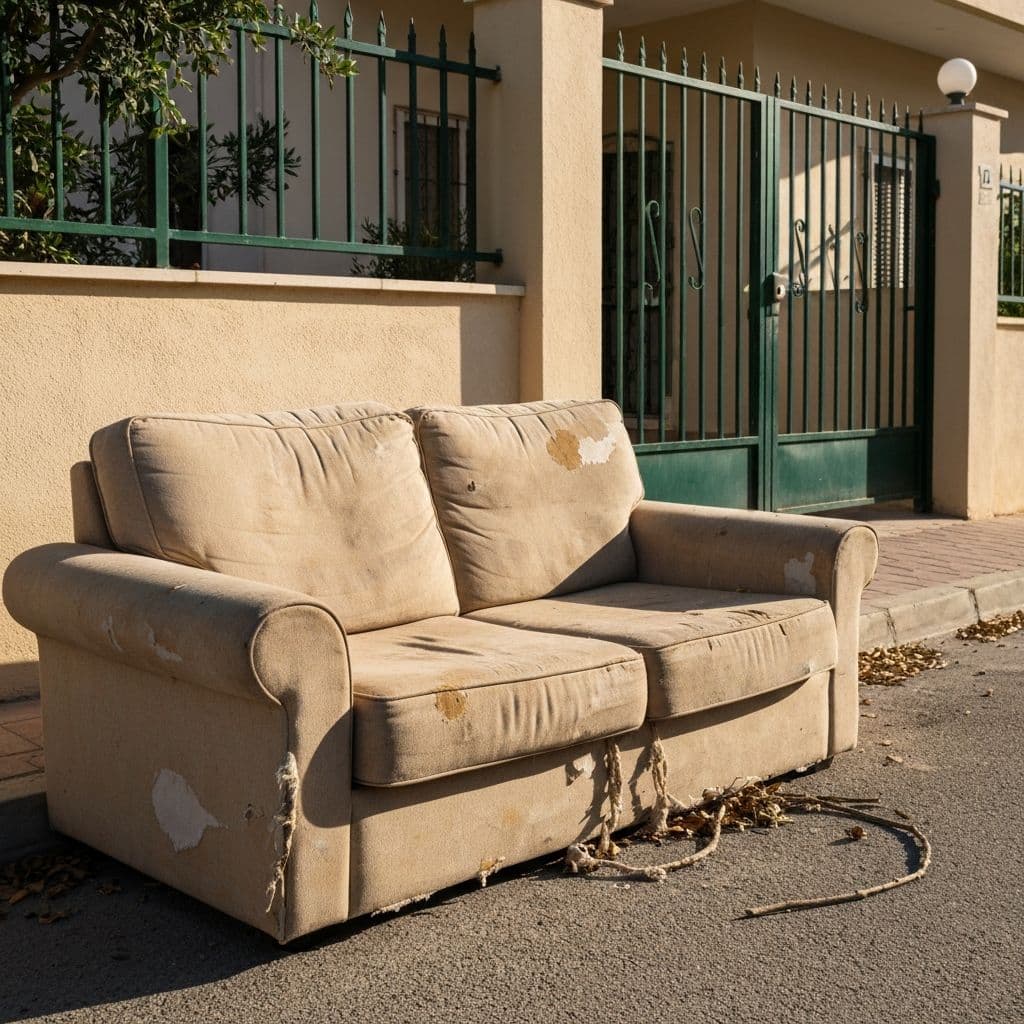
How to Dispose of an Old Sofa in Cyprus
Options for removing an old sofa when it no longer fits in your home or car.