How to Dispose of Palm Tree Waste
Fronds, dry skirts and trunk sections: where each can go in Cyprus, when a Green Point is enough, what skip size a palm job needs, and what to do if the palm has red palm weevil.
Introduction
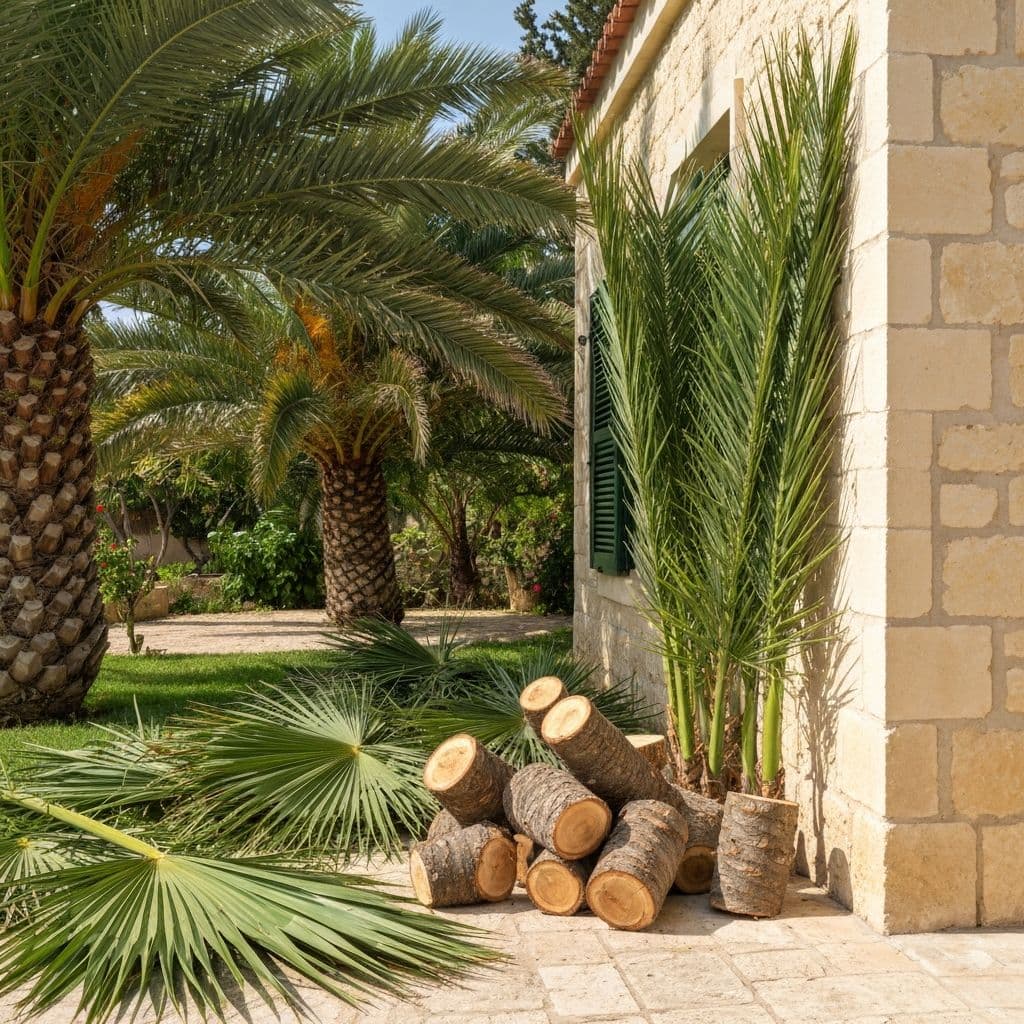
Palm trees look spectacular in a Cyprus garden until the day you have to cut them. A single pruning job can leave you with a surprisingly large pile of fronds, dry leaf skirts, sharp leaf bases and heavy trunk pieces.
Unlike most garden waste, palm material does not behave well. It is bulky rather than heavy. It does not compact. It scratches cars and bins as you move it. And it fills a van or a skip much faster than the weight suggests.
What follows is how to plan the cleanup properly, what each disposal option actually means for palm waste, and the two Cyprus-specific things almost nobody tells you upfront: trunk sections and red palm weevil.
Why palm waste behaves differently from any other pruning
Lemon, olive and orange branches behave roughly the same: woody, you cut them shorter, they stack neatly, you carry them away. Palm material breaks every one of those assumptions.
Practical consequences you should plan for:
- Long fronds (1.5–3 m) are floppy and springy, awkward for one person to handle.
- Dry leaf material is brittle and produces dust and fibres when broken up.
- Leaf bases are thick and sharp, and on some species genuinely cut skin.
- Trunk sections hold water inside and are heavier than they look.
- Nothing about a palm pile compacts. Full volume is also pickup or skip volume.
Four kinds of palm waste, and they don't all dispose the same way
Pruners often quote a single 'palm cleanup' price without explaining that what comes off the tree splits into different things, each with its own handling cost and disposal channel:
- Fresh green fronds. Bulky but the lightest; easiest to cut into 1 m sections and bag.
- Dry palm skirts (old leaves left around the trunk). Brittle, dusty, surprisingly large in volume.
- Leaf bases and spikes. Short, hard and sharp; they need contractor sacks, not plastic bags.
- Trunk sections. Only if you remove the whole tree; heavy, wet-cored, often need machinery.
- Mixed cleanup waste. Pots, irrigation pipe, dead bougainvillea and gravel often surface during palm work.
Cut everything before moving it
The single biggest mistake homeowners make is trying to drag full-length fronds out of the garden. They catch on walls, scratch cars, snap unpredictably, and the dry tip end is rarely where you expect.
Practical rule: cut everything to a one-person carry length before transport. For most adults that is 1–1.5 m.
- Thick gloves are non-negotiable: even non-spiky species have edges that cut dry skin.
- Long sleeves against the fibre splinters palms shed when broken.
- Eye protection when removing dry skirts; the fibres travel.
- Stack cut pieces directly into a vehicle or a contractor sack. Pile-and-restack doubles the work.
- Sweep before the wind picks up. Dry palm fibre travels metres in a light breeze.
Option 1: Make removal part of the pruning quote (not an afterthought)
If you are hiring someone to prune or remove a palm, the removal of the waste is often the same cost as the cutting itself. Volume is the reason: a confident pruner can drop a tree in 20 minutes; bagging and hauling the result can take two hours.
Get this in writing before they start:
- Is removal a fixed price, or per cubic metre of waste
- Does the price include trunk sections, or only the lighter fronds
- What if more palms come down than planned (storm damage, weevil): is the unit price the same
- Where is the waste taken (Green Point, transfer station, private dump), and is the disposal fee in the quote
- Will the area be swept clean of dry fibre before they leave
Option 2: Green Point, fine for one palm, awkward for several
Green Points (Πράσινα Σημεία) accept palm fronds as household garden waste. The catch is that every facility has a daily quantity limit, and palm pile volume eats through it fast.
- One mature Phoenix or Washingtonia palm worth of pruning usually maxes out a single visit
- Cut all fronds to ≤1.5 m before drop-off; full-length fronds are refused at most facilities
- Trunk sections are not always accepted as garden waste; call the facility before driving over
- Commercial palm work (contractor, multiple trees) is usually not accepted under household rules
- Most Green Points run morning-to-early-afternoon hours and close earlier in winter
Palm cleanup turned into a bigger job?
Several palms plus old garden furniture, broken pots and soil bags? One skip drop, ordered online. We deliver across Cyprus, often the same day.
Book a Skip NowOption 3: Skip hire, almost always the right call for several palms
Plan for about double the skip you would guess from the weight: palm waste fills volume, not weight. Fronds from one or two palms fit a 6 m³; a mature palm cut down with its trunk, or several palms plus a garden clean-up, is a 9 m³ job. The price of a size is the same whether it holds fronds, trunk sections or soil.
Palms are everywhere in the holiday-villa gardens of Pernera and Kapparis and around the pools of Ayia Napa; skip hire in Protaras, in Paralimni and in Ayia Napa works the same way as anywhere else: pick the size and put the pin on the driveway. The typical palm-job mix that lands in a skip:
- Fronds and dry skirts: they take the volume
- Cut trunk sections: they take the weight, so they go in as a layer at the bottom
- Spiky leaf bases: sturdy sacks or straight into the skip
- Other outdoor waste that turns up: pots, sun loungers, irrigation pipe, old fencing
- Pick Garden as the waste type. If trunk sections or soil go in, the form tells you whether your size has a heavy-waste limit
Palm trunks deserve their own conversation
If a whole palm is coming down, the trunk is the single biggest disposal headache and almost always missing from the original quote.
A palm trunk is not like a fruit-tree log:
- It is wet inside (palms are basically water columns), so kilo for kilo it is much heavier than dry wood.
- It does not split with an axe. The fibres are interwoven, not grained.
- Sections over 50 cm in diameter typically need a chainsaw and two people minimum.
- Many Green Points refuse them as household garden waste. Call before driving.
- Agree the trunk plan before the saw starts: who cuts, who carries, who pays for removal. Get it in writing.
Red palm weevil: when the palm is sick, do not DIY
Cyprus has had an ongoing red palm weevil (Rhynchophorus ferrugineus) outbreak for years. If your palm is leaning, the crown is collapsing, the heart has gone soft, or you see sawdust at the base, assume infestation until proven otherwise.
Why this matters for disposal, not just the tree itself:
- A weevil-infested palm is structurally unsafe to climb or fell without proper equipment. Call a licensed arborist.
- Crowns of infested palms can collapse mid-cut, and the trunk can split unpredictably.
- Some municipalities require infected material to go through specific disposal channels to limit spread. Ask before transport.
- Treat any palm you suspect of weevil damage as a professional job, not a DIY weekend project.
- If a neighbour's palm shows symptoms and yours are healthy, get yours inspected. The weevil moves between palms.
Pools and shared complexes: coordinate before the saw comes out
Palms around pools and in apartment or townhouse complex grounds add complications that do not exist for a villa garden. The mess spreads further and the cleanup is shared.
Practical playbook:
- Pool areas: cover the pool fully before pruning. Palm fibre clogs skimmers and falls between paving stones for weeks.
- Pool drains and filters: dry palm fibre is the most common reason for blocked skimmer baskets after garden work.
- Complex pruning: agree with the property manager who pays for removal. Pruning fee and disposal fee are negotiated separately.
- Never stack palm waste in shared parking, by the bins, or near the pool. Once dry it spreads and someone else has to deal with it.
- Plan removal the same day as pruning in shared spaces. Dry palm waste left two days becomes everyone's problem.
Book a skip in your city
Prices, same-day rules and permits differ by city, so each one has its own page: skip hire in Limassol, skip hire in Nicosia, skip hire in Larnaca and skip hire in Paphos. The east coast and the Polis side have their own pages too: skip hire in Paralimni, skip hire in Ayia Napa, skip hire in Protaras and skip hire in Polis. The price is fixed in the form before you confirm.
Related articles
 Garden Waste
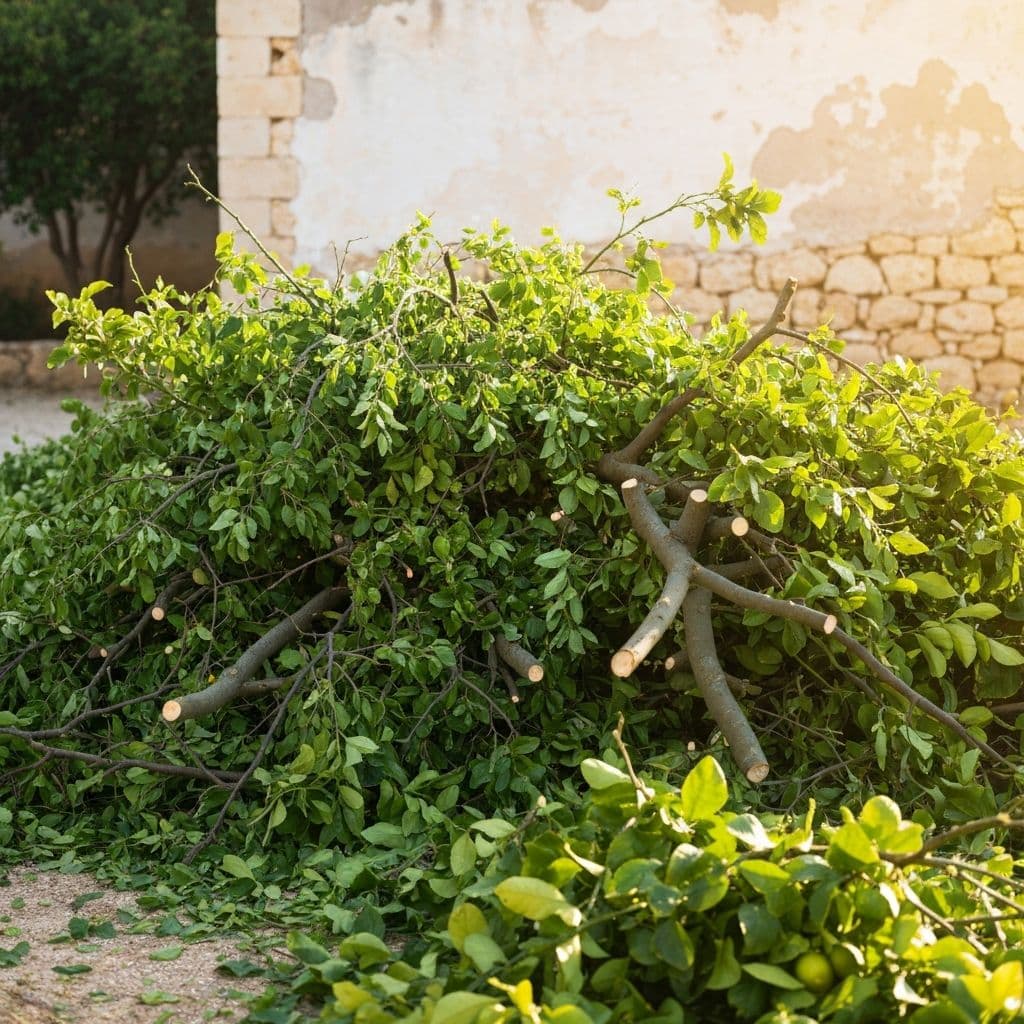
What to Do With Tree Branches After Pruning
How to deal with piles of branches after pruning lemon, olive, orange, or garden trees.
 Waste Disposal Guides
What Size Skip Do I Need in Cyprus?
The short answer: a 6 m³ for a bathroom, one room or a garden after pruning; a 9 m³ for a kitchen or a flat clearance; a 12 m³ for a villa strip-out. Sizes, prices and the traps.
 Furniture Disposal
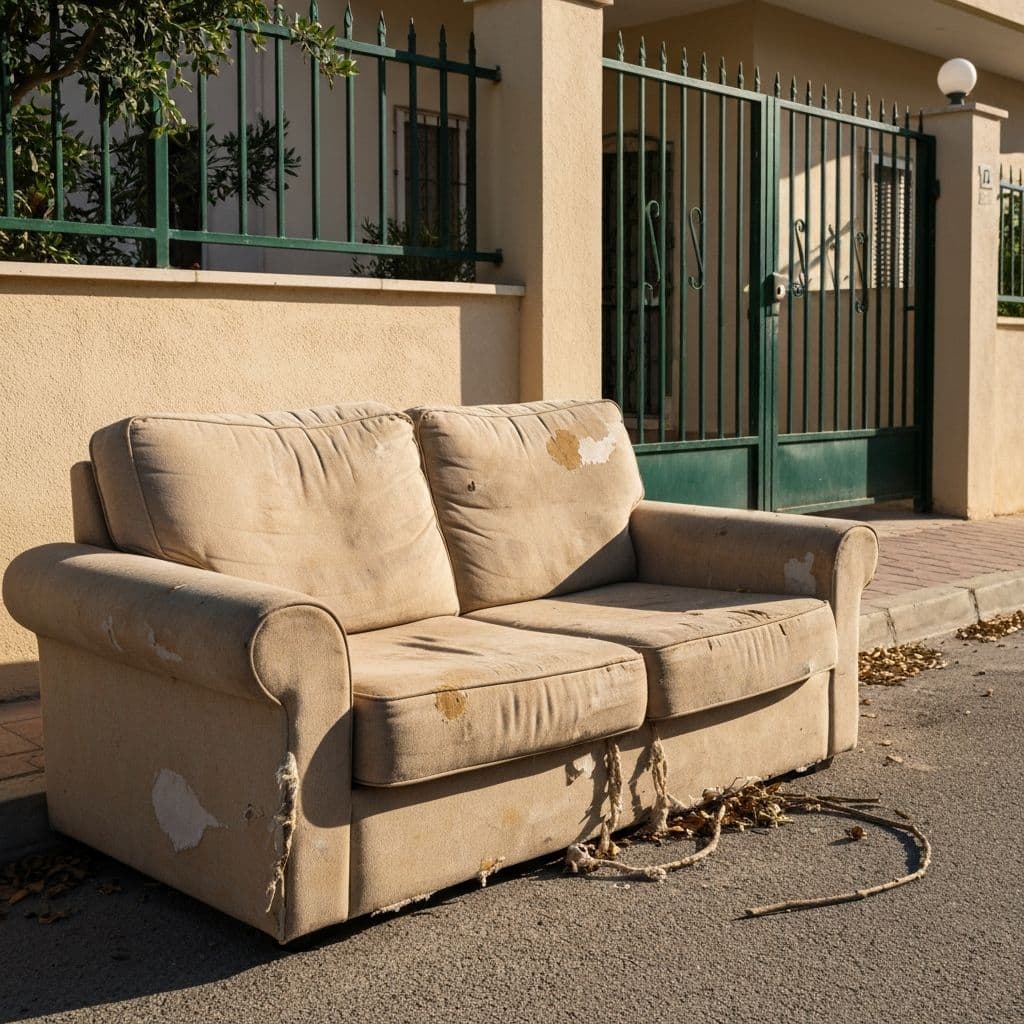
How to Dispose of an Old Sofa in Cyprus
Options for removing an old sofa when it no longer fits in your home or car.