What to Do With Tree Branches After Pruning
How to deal with piles of branches after pruning lemon, olive, orange, or garden trees.
Introduction
Pruning trees is a normal part of life in Cyprus. Lemon, orange, olive, pomegranate, palm and ornamental trees grow fast, especially after winter rain and during the warmer months.
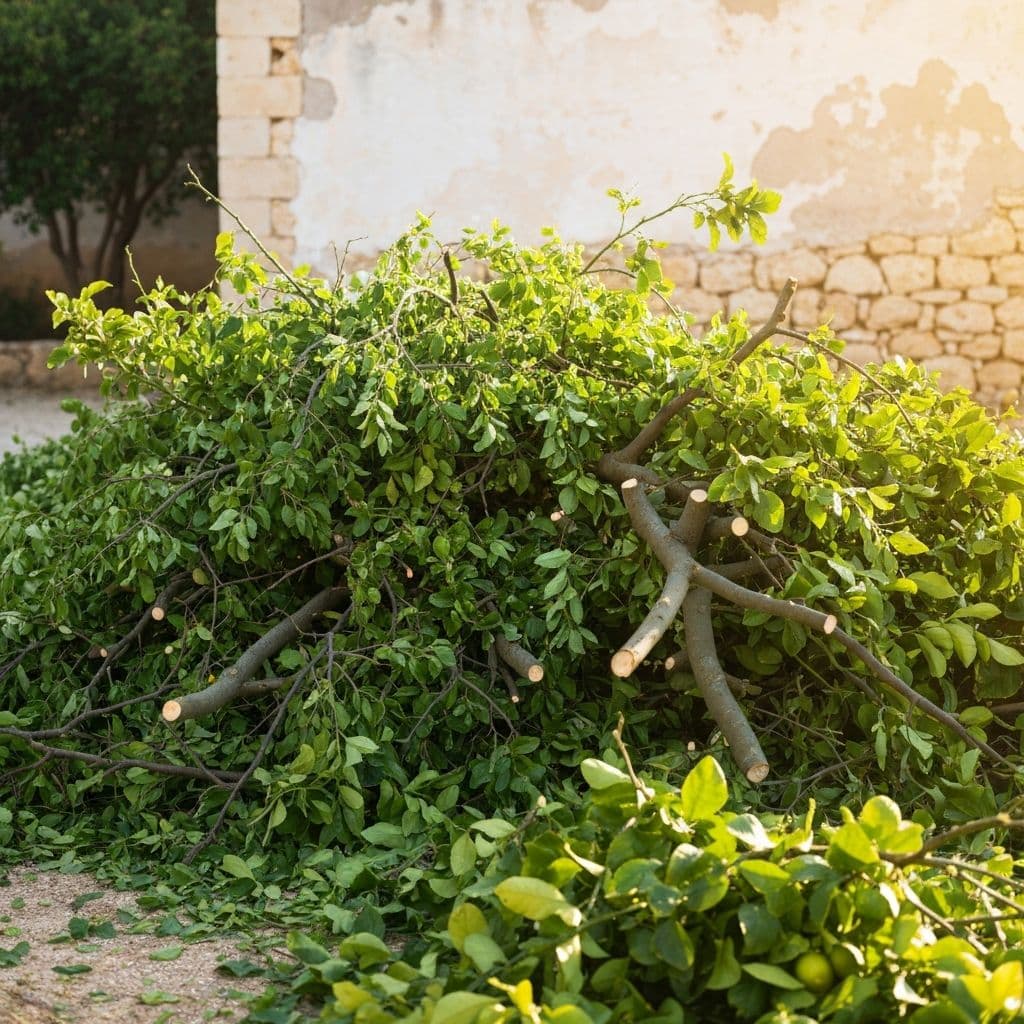
The problem usually starts after the work is finished. A few branches quickly become a large pile that does not fit normal rubbish bins, will not fit a regular car, and creates issues if left on the pavement.
What follows is what to actually do with tree branches after pruning in Cyprus, from a few citrus cuttings to a full garden clearance.
Do not put branches in normal bins, and do not dump them on empty plots
Public rubbish bins fill up fast when someone shoves a pile of branches in. They will not close, they block other residents, and they can damage the collection truck arm. In most municipalities the pile will sit there uncollected until someone arranges proper green waste removal.
The other common move, dumping branches on an empty plot, beside a field, or next to a country road, looks easy but it is illegal in Cyprus and genuinely dangerous in summer.
- Fire hazard. Dry branches in summer heat are dangerous near homes, fields and dry grass.
- More dumping. A dumped pile attracts more illegal dumping in the same spot.
- Blocked pavements and narrow village roads.
- Neighbour complaints and possible municipal penalties.
Estimate the volume first: small bag or trailer load
Before picking a disposal method, look at what you actually cut. The right answer is wildly different for a single citrus trim and a full overgrown-garden clearance.
Quick gauge:
- A few bags of leaves and small cuttings: yourself, maybe a couple of trips.
- Branches from one mature olive or lemon tree: usually a small van or pickup load.
- Palm fronds: assume double the volume you expect; they do not compact.
- Multiple trees plus old pots and fencing: a skip or a proper collection service.
- If it would not fit in your car boot, plan transport before cutting more.
Option 1: Reuse what you can in your own garden
Small amounts of pruning waste are worth keeping back. The Cypriot climate turns cut branches into excellent dry kindling within a couple of weeks, and a small shredder converts soft cuttings into mulch that feeds straight back into the same beds.
Realistic uses for small piles:
- Thin dry branches: cut to 30 cm, stack as kindling for the winter wood burner.
- Soft leaves and clippings: compost bin or direct mulch around shrubs.
- Straight thin branches: plant supports for tomatoes, beans, climbers.
- Olive prunings: small dry pieces make slow-burning kindling.
- Skip this option entirely if the pile is bigger than a couple of wheelbarrows.
Option 2: Hire a gardener who includes waste removal
If you are paying someone to prune, the price of the work and the price of taking the waste away are two very different things. Some gardeners only cut and leave the pile on your property, and finding out after the fact is expensive.
Ask before agreeing on the price:
- Does the quote include waste removal, or is it for the cutting only
- Will palm fronds and thick branches go too, or only soft cuttings
- Where do they take the waste: Green Point, transfer station, private dump
- Will the area be swept clean at the end
- Is there an extra fee per cubic metre if the pile turns out bigger than estimated
Option 3: Take it to a Green Point yourself
Green Points (Πράσινα Σημεία) accept household garden waste (branches, leaves, prunings), usually free or for a token fee.
What catches people out:
- Cut long branches to 1–1.5 m before drop-off; full-length branches are usually refused.
- Some Green Points refuse waste from commercial landscaping. They are for households.
- Quantity limits apply at most facilities: multiple trips for a large pile.
- Open hours are short, typically morning to early afternoon, fewer days in winter.
- Sorted waste only. Soil and rubble go to different bays.
Pruned more than expected?
Branches plus palm fronds plus old pots plus broken fencing? It all fits in one skip drop. Order online. We deliver across Cyprus, often the same day.
Book a Skip NowOption 4: Garden waste collection through the municipality
Some Cyprus municipalities run garden waste collection: sometimes a scheduled green-bin day, sometimes a phone-booked pickup for bigger piles. It varies a lot by area.
Call your local municipality and ask specifically:
- Is there a scheduled green waste collection day for your street
- Can branches be bundled, or do they need to go in a green bin
- Maximum branch length they will collect
- Whether palm fronds are accepted or counted as bulky waste separately
- Whether there is a fee for non-scheduled pickup of a bigger pile
Option 5: Skip hire, best for a full garden clean-up
One mature tree of pruning is rarely enough to fill a skip. But green waste is almost never the only thing coming out of a garden once you start. A skip pays off when the trees are part of a bigger outdoor refresh.
Out west, the olive, carob and citrus terraces around Polis, Argaka and Prodromi produce piles no Green Point takes in one go; skip hire in Polis also covers Latchi and the villages of the bay. On the east coast it is the hedges and bougainvillea of Paralimni and Deryneia: skip hire in Paralimni.
Typical mix that ends up in a garden skip:
- Cut branches, palm fronds, leaf bags
- Broken plant pots, terracotta shards, soil bags
- Old garden furniture, plastic chairs, sun loungers
- Damaged umbrellas, broken fencing, wooden boards
- Bags of weeds and roots after a real clearance
- Always describe the mix when booking. Soil weight affects pricing, and some providers split rubble from green waste.
Tree-type specifics: palm, citrus, olive
Most pruning advice treats all green waste as one thing. It is not. Three Cyprus-common trees behave very differently, and that affects what you need to handle them.
- Palm. Fronds are long and tough and do not compact. Plan for 2× the volume you expect, wear gloves (some species have spikes), cut fronds into 1 m sections before bagging or transport. They fill a skip much faster than weight suggests.
- Citrus (lemon, orange, mandarin). Thorny branches tear thin plastic bags within seconds. Use thick gloves, sturdy contractor sacks, cut into 50 cm pieces. Keep children and pets away from the pile.
- Olive. Woodier and heavier than other prunings. A few mature olive trees fill a pickup quickly by weight, not just volume. Dry olive wood is excellent slow-burning kindling if you have a wood burner.
Can you burn the branches in the garden?
Short answer: usually no, and definitely not without checking local rules first. Open burning is restricted across most of Cyprus, and during the dry season (April–October) the fire risk turns even a small backyard fire into a serious incident, for the area and for your personal liability.
What applies in your area depends on:
- Forestry Department fire risk status for the day (high or extreme: burning prohibited)
- Municipal by-laws on open fires inside built-up zones
- Distance from forested land, fields, or other structures
- Whether you are within a designated forest protection zone
- Safer in almost every case: a Green Point trip, municipal collection, or a skip
Book a skip in your city
Prices, same-day rules and permits differ by city, so each one has its own page: skip hire in Limassol, skip hire in Nicosia, skip hire in Larnaca and skip hire in Paphos. The east coast and the Polis side have their own pages too: skip hire in Paralimni, skip hire in Ayia Napa, skip hire in Protaras and skip hire in Polis. The price is fixed in the form before you confirm.
Related articles
 Garden Waste
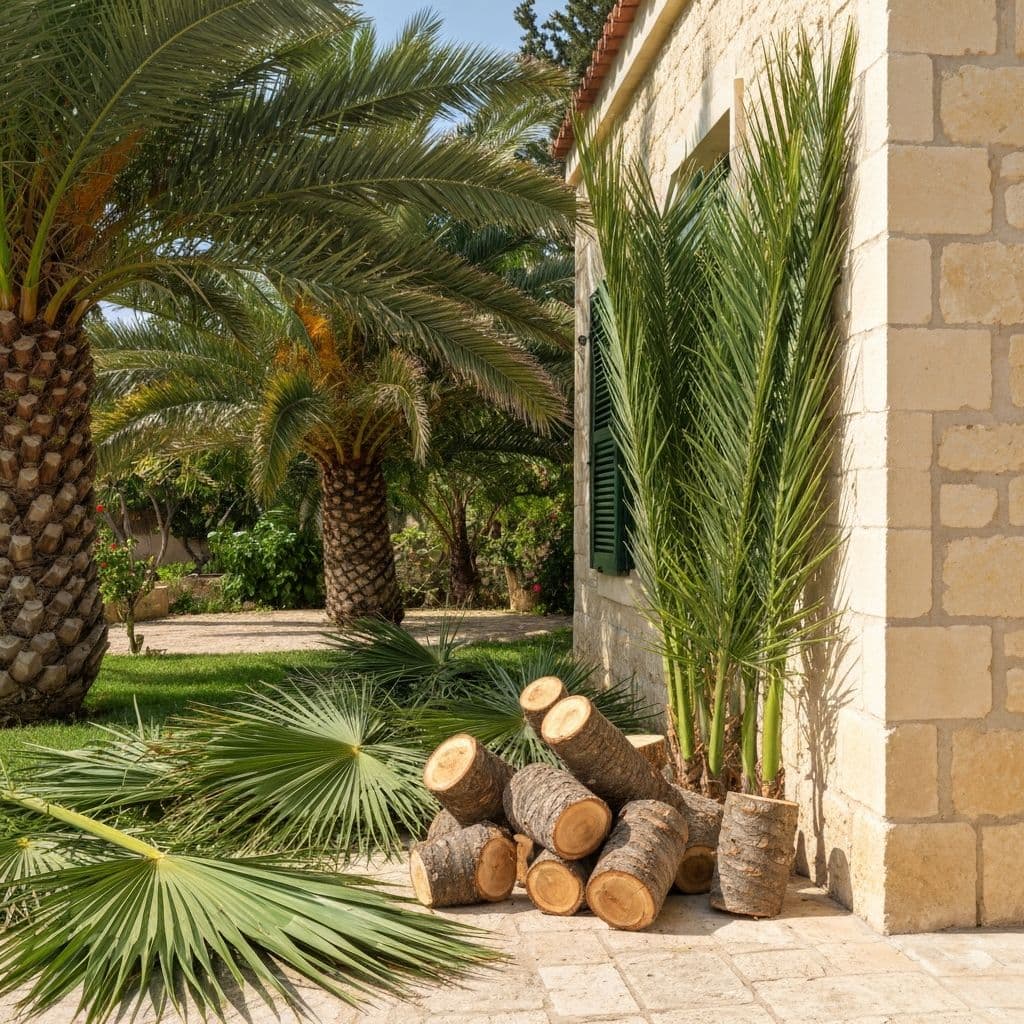
How to Dispose of Palm Tree Waste
Fronds, dry skirts and trunk sections: where each can go in Cyprus, when a Green Point is enough, what skip size a palm job needs, and what to do if the palm has red palm weevil.
 Waste Disposal Guides
What Size Skip Do I Need in Cyprus?
The short answer: a 6 m³ for a bathroom, one room or a garden after pruning; a 9 m³ for a kitchen or a flat clearance; a 12 m³ for a villa strip-out. Sizes, prices and the traps.
 Furniture Disposal
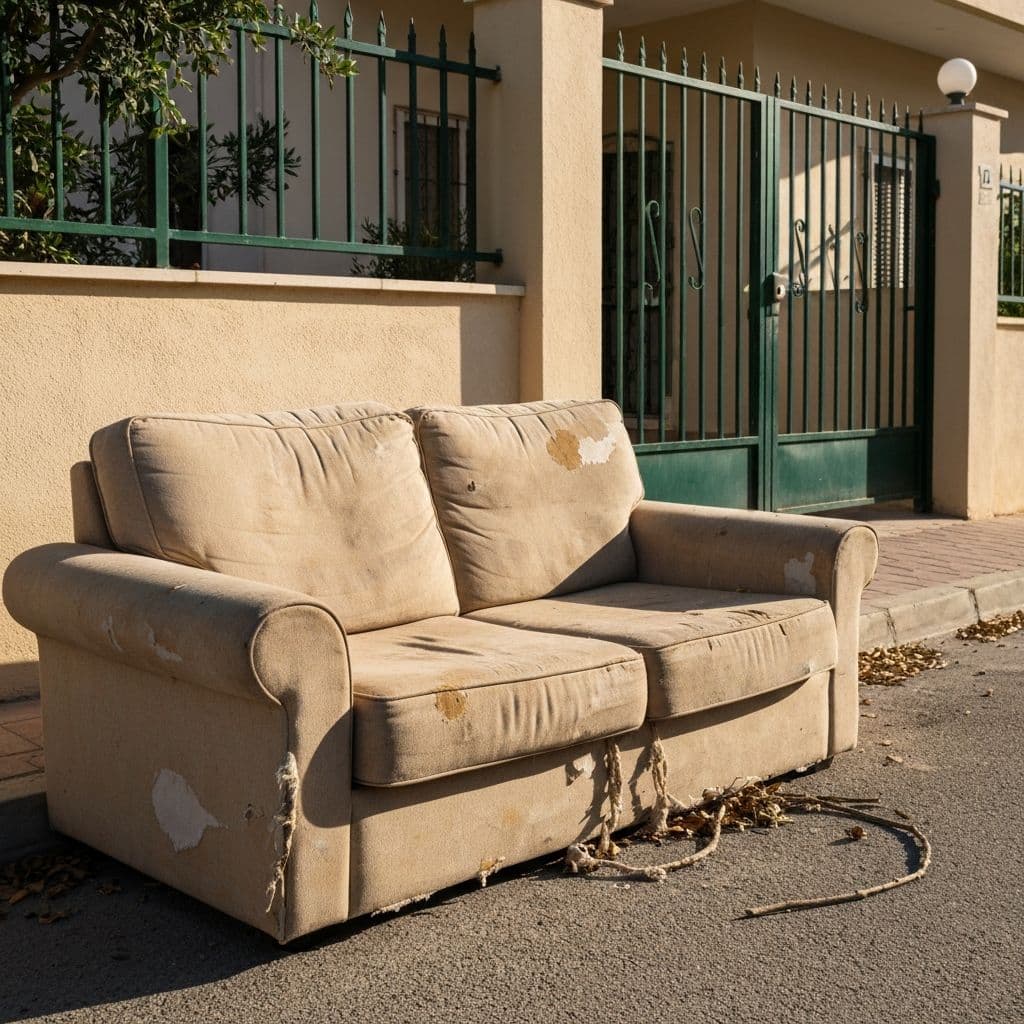
How to Dispose of an Old Sofa in Cyprus
Options for removing an old sofa when it no longer fits in your home or car.